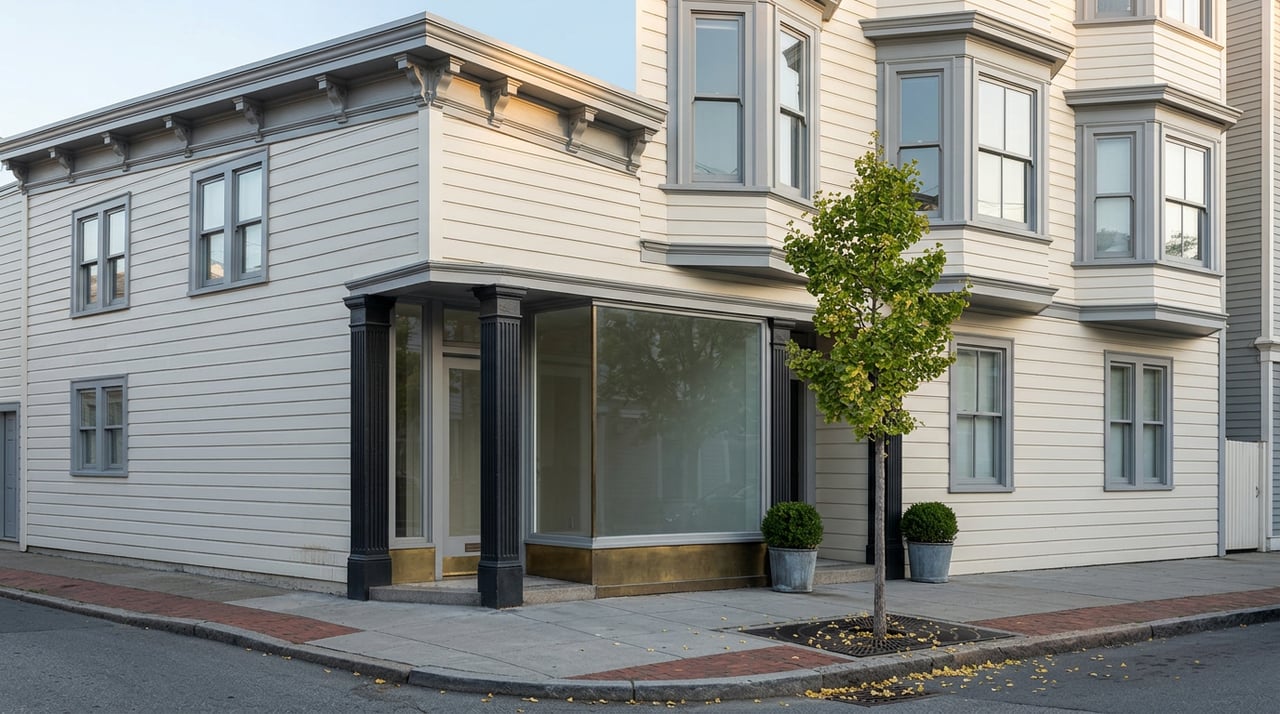
Walk down 24th Street on a Saturday and the loud version of Noe Valley is easy to find. There's a line at the bakery, a crowd around the farmers market tables at the Town Square, maybe a stroller traffic jam outside the newest brunch spot. But keep walking past the storefront with the hand-painted candy sign near Sanchez and you'll find a narrow door tucked behind it, easy to miss unless you already know it's there. Open it and you're standing in front of roughly 28,500 movies on DVD and VHS, the last standalone video rental store left in San Francisco.
That store, Video Wave, has been open since 1983. It has outlasted Blockbuster, the DVD era, Netflix's mail-order arm, and a pandemic. Its long run is part of the story of 24th Street.
What actually closed on this stretch
Noe Valley's five blocks of 24th Street have churned through video and music retail at a pace that's easy to forget once the storefronts fill back in with something new. A short accounting:
- Streetlight Records ran on 24th Street for 32 years before closing in January 2009, one of four locations the chain shut as digital music took over.
- Noe Valley Video opened at 3936 24th Street in September 1998 and closed about ten years later, in October 2008, done in by what its owners called a mix of a sinking economy, rising overhead, and streaming competition.
- Le Video, once the best-known video rental shop in the city with a 90,000-title catalog in the Inner Sunset, folded its Noe Valley-adjacent footprint and eventually its whole operation by 2015.
- Video stores in Bernal Heights and Glen Park closed around the same stretch of years, sending their orphaned customers across neighborhood lines looking for somewhere else to rent from.
Video Wave picked up plenty of those customers. Its co-owner has said she can still name every closed competitor her regulars mourn.
The numbers behind Video Wave
Video Wave's story also includes its collection and its subscribers.
Current owner Colin Hutton bought the store in 2005 for $80,000, after a decade working as a reference librarian at the San Francisco Law Library. He knew streaming was coming. What he didn't expect is that the math would eventually flip in his favor. Netflix's DVD-by-mail catalog peaked at an estimated 100,000 titles before shrinking to around 4,000 as the company shifted its attention to streaming, and industry trackers have pegged Netflix's US streaming library at roughly 5,000 titles, a number that shifts constantly as licensing deals expire. Video Wave, meanwhile, carries close to 28,500, including 3,200 tapes still on VHS, formats and cuts of films that never made the jump to any streaming platform at all.
The business model is closer to a subscription than a transaction. Members pay around $8 a month, which includes one free rental, with additional rentals running $6 to $8. Hutton has said he's down to about 520 subscribers, off from where he'd like to be, and that some months he loses money outright. Some of those subscribers rarely rent anything. They keep paying anyway.
"I've lasted longer than other stores because of the community and the neighborhood."
— Colin Hutton, quoted by the San Francisco Examiner
Against that backdrop of local closures, Video Wave remains open.
Another Noe Valley specialty shop
A few blocks away, near 24th and Castro, the story shifts from video to chocolate. Chocolate Covered has been open for 31 years, run the entire time by owner Jack Epstein and his partner and co-owner Marilyn Sitkoff. The shop is 600 square feet. It stocks chocolate bars from more than 100 companies, representing more than 30 countries, on walls lined with hand-decorated tins printed with San Francisco street scenes.
It isn't the anchor tenant on the block. It doesn't have a line out the door. What it has is the kind of specificity that makes it worth a special trip rather than a passing glance. Epstein has said his goal is simple: people come in happy and leave happier. A member of the Noe Valley Merchants and Professionals Association has described making a special walk over just to find a tin printed with a friend's street name or a favorite neighborhood bar, something no algorithm would surface and no big retailer would bother stocking.
Both shops have been open for decades, with distinct specialties.
What this means for your next walk down 24th
The next time you're heading to the Saturday market or grabbing a table at whatever just opened, take the long way past Sanchez and look for the candy shop with a second door behind it. Notice how many storefronts on this block have turned over in the years you've lived here, and how few have simply stayed exactly the same. Noe Valley's character isn't only built by what's new. It's built by the handful of places that never needed to be.
If you're weighing whether now's the right time to sell a home near one of these stretches of 24th Street, or you're simply curious what a place like yours is worth in today's market, Adelaida Mejia can walk you through it with the same eye for detail that keeps a neighborhood's real character intact. Book an appointment or request a home valuation whenever you're ready to talk.